
Foundational Knowledge
Five-Minute Eye Break Basics: Relieving Screen Fatigue
Staring at a computer monitor, smartphone, or tablet for hours places sustained demands on the delicate focusing system of the human eye. Understanding how short, structured five-minute pauses function allows you to protect your visual stamina throughout demanding school and work days.

The Physiology of Near-Work Strain
When you read words on a screen or notebook 40 centimeters away, the tiny ciliary muscles inside your eye must contract continuously to alter the shape of your lens. Over hours of unbroken close work, these muscles experience prolonged tension akin to holding a light weight in your outstretched arm without putting it down.
Simultaneously, clinical studies show that when people stare intensely at screens, their spontaneous blinking rate drops by more than 50%—from an average of 15–20 blinks per minute down to only 5–7 blinks. This causes the tear film coating the cornea to evaporate, leading to stinging, redness, and a gritty feeling often mistaken for worsening eyesight.
The 20-20-20 Rule: A Benchmark for Daily Screen Use
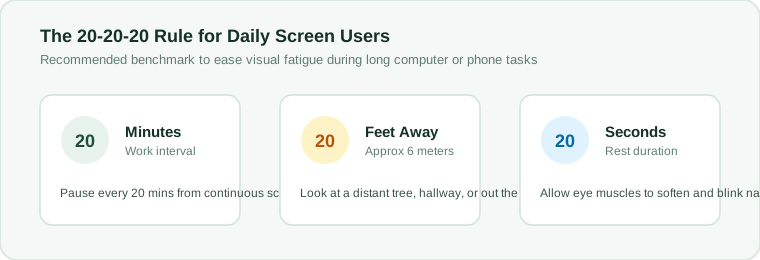
A proven standard developed by optometrists is the 20-20-20 guideline. Taking short pauses every 20 minutes to look at an object 20 feet away for 20 seconds relaxes ciliary spasm and triggers natural re-lubricating blinks.
Why Five Minutes is the Ideal Routine Length
While a 20-second glance into the distance provides immediate momentary relief, dedicated five-minute intervals allow you to perform a complete recovery cycle:
- Minute 1: Deliberate, conscious blinking to replenish the oily lipid layer of the tear film.
- Minute 2: Deep distance viewing to completely relax the ciliary muscle fibers.
- Minute 3: Gentle directional gaze sweeps to stimulate smooth ocular motility.
- Minute 4: Gentle near-to-far accommodation transitions.
- Minute 5: Warm hand palming and restful breathing to release forehead tension.
Educational Note: Eye breaks do not alter eyeball axial length or eliminate astigmatism. They function strictly as an ergonomic fatigue-management habit, similar to stretching your back during desk work.
Related Resources
Ready to try the exercises? Explore our Gentle Eye Exercises Guide or use the interactive Break Checklist to review your workspace habits.