
Habit Formation
Everyday Eye-Break Habits: Integrating Pauses into Daily Life
The greatest barrier to visual comfort during long workdays is not lack of knowledge, but remembering to take breaks before fatigue sets in. Establishing simple habit cues transforms eye care from an afterthought into a natural rhythm of your workday.

Anchor Your Breaks to Daily Transition Triggers
Rather than relying on willpower or waiting until your eyes burn, attach your 5-minute pause to activities you already do repeatedly each day:
- The Water Tumbler Cue: Every time you finish your glass or tumbler of water, take 2 minutes to look out a window or doorway before getting up to refill it.
- The Meeting Wrap-Up: When an online meeting finishes, resist the urge to immediately open emails. Push your chair back, close your eyes, and perform 10 slow deliberate blinks.
- The Study Chapter Finish: For university students in Metro Manila or Cebu, mark the end of each textbook section with a 5-minute distance viewing pause.
Adapting to Common Philippine Living and Working Realities
Work environments vary considerably. Here is how to adapt your habits depending on your space:
| Environment | Common Challenge | Practical Adaptation |
|---|---|---|
| Home Office / Bedroom Desk | Desk positioned facing a blank wall with no window in direct sight. | Turn your chair 90 degrees during breaks to look down a hallway, or step to the front door/balcony for 3 minutes of horizon viewing. |
| Shared Office / BPO Floor | Fluorescent overhead lighting and continuous monitor displays. | Practice subtle downward gaze shifts and deliberate slow blinks while reading; do light palming with elbows propped on the desk. |
| Classroom / Library | Quiet study spaces where walking around is discouraged. | Look upward toward high architectural ceiling beams or opposite wall clocks to stretch focal depth without leaving your seat. |
Balanced Rest Beyond the Desk
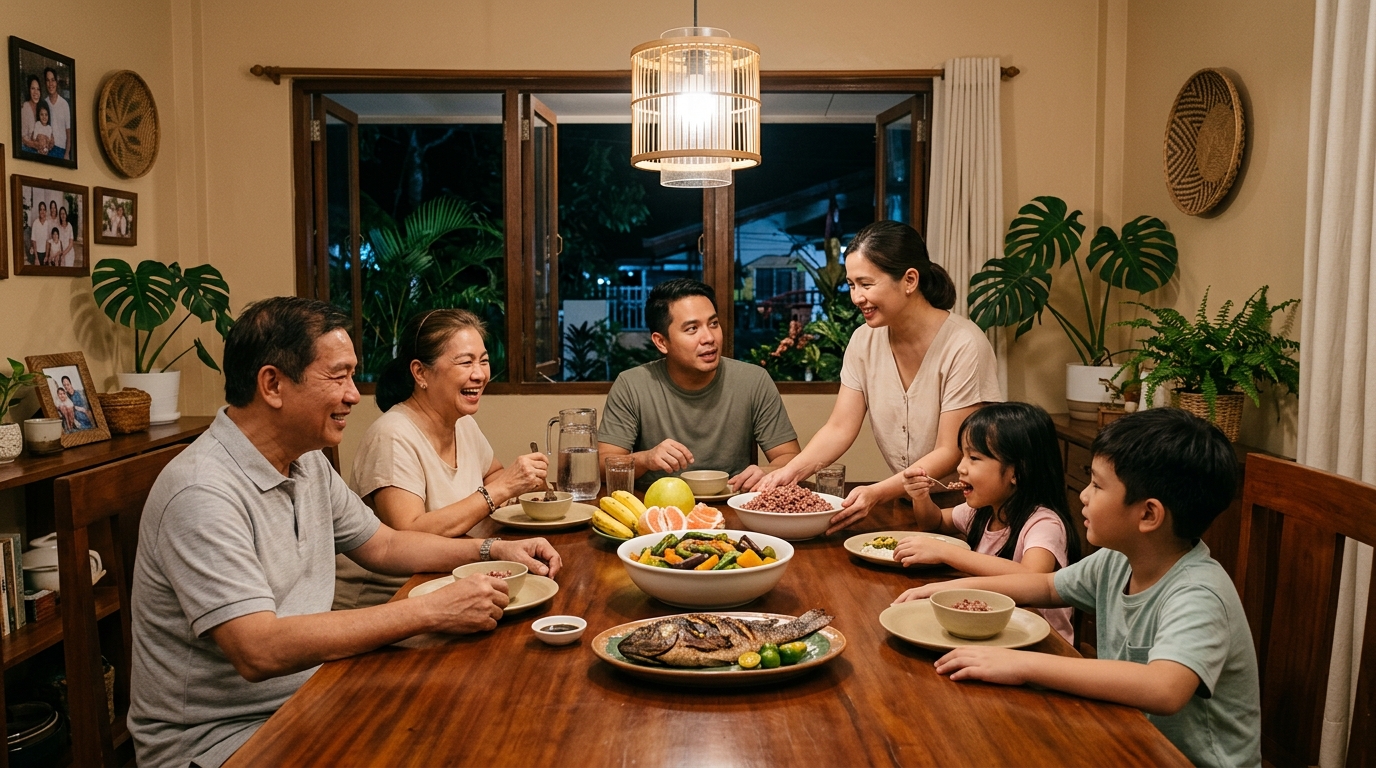
Eye health is supported by overall daily routines. Getting 7–8 hours of sound sleep allows corneal epithelial cells to regenerate. Eating wholesome meals with leafy greens, squash (kalabasa), and fresh fish provides carotenoids like lutein and zeaxanthin that support natural retinal pigment density.
Healthy Expectation: Healthy habits reduce daily screen strain, but they are not a substitute for comprehensive annual vision exams. Always keep your prescription lenses up to date.