
Comprehensive Manual
Everyday Eye Exercise Guide: Your Step-by-Step Manual
This master guide gathers our complete set of evidence-aware, equipment-free eye exercises into one structured manual. Use this sequence during your morning pause, midday break, or late afternoon study session.
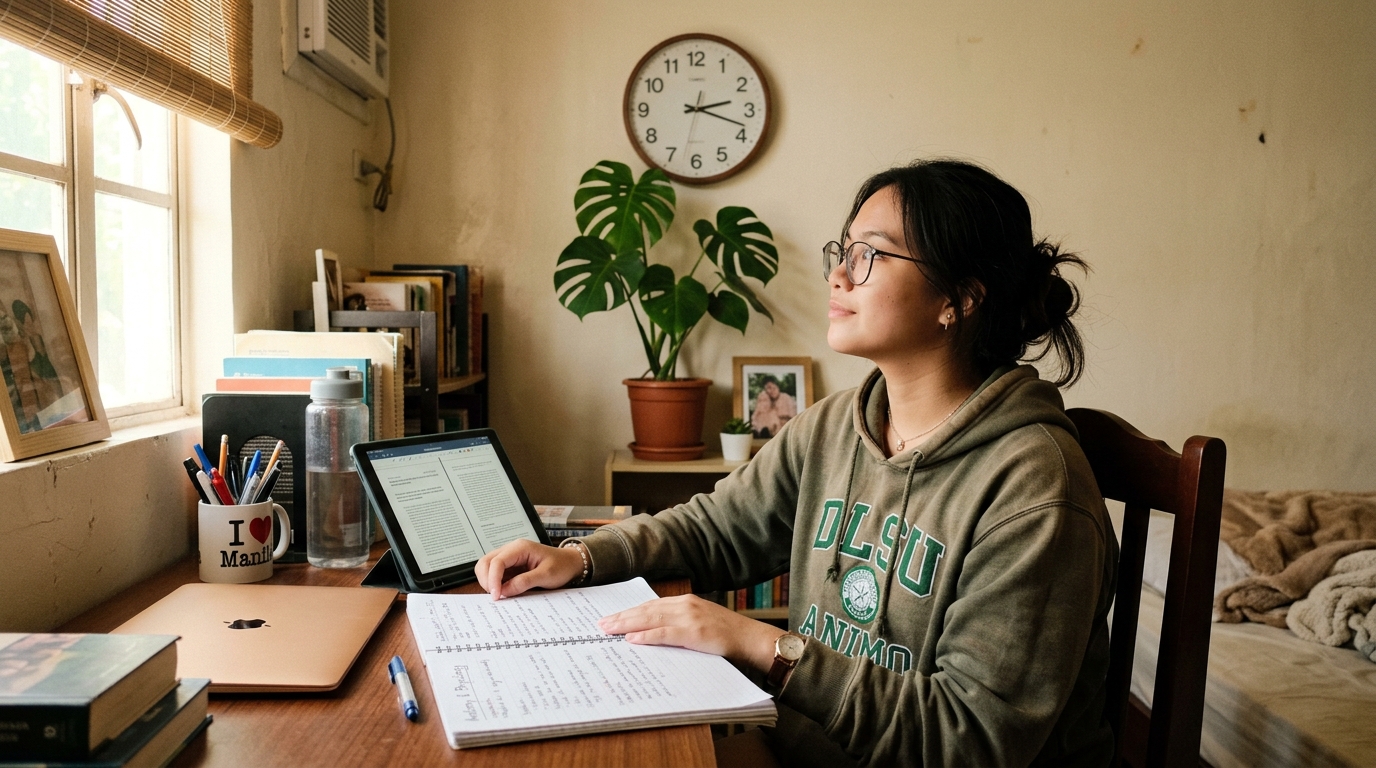
Preparation: Ergonomic Posture Check
Before beginning your exercises, adjust your physical posture. Sit upright with your back supported, uncross your legs, and plant your feet flat on the floor. Drop your shoulders down away from your ears, and take two slow, deep breaths to release neck stiffness.
Phase 1: Hydration & Tear Lubrication (Minutes 0:00 – 1:00)
Begin by closing your eyes softly. Count 2 seconds, then open gently. Perform 12 slow repetitions. Focus on feeling the moisture spread evenly across the surface of each cornea. If your eyes feel dry, pause for 10 seconds with both eyes closed to allow tear meniscus stabilization.
Phase 2: Horizon Relaxation (Minutes 1:00 – 2:00)
Turn your gaze away from any digital display or printed document. Find a point at least 20 feet (6 meters) away—such as a distant house, cloud, or high ceiling corner. Soften your gaze; do not try to inspect microscopic details. Simply let your eyes absorb the broad landscape effortlessly.
Phase 3: Smooth Cardinal Motility (Minutes 2:00 – 3:00)
Holding your head steady, gently direct your gaze in the four cardinal directions:
- Gaze upward toward the ceiling line for 3 seconds.
- Gaze downward toward the baseboard for 3 seconds.
- Gaze horizontally to your far left for 3 seconds.
- Gaze horizontally to your far right for 3 seconds.
- Complete two slow cycles. If any muscle feels tight, reduce the angle of movement.
Phase 4: Near-Far Dynamic Accommodation (Minutes 3:00 – 4:00)
Extend one arm in front of you with your thumb pointed upward at eye level (about 25–30 cm away). Look at your thumbnail for 3 seconds. Then shift your focus directly to the furthest wall or window landmark for 5 seconds. Repeat this transition 6 times smoothly.
Phase 5: Restful Warm Palming (Minutes 4:00 – 5:00)
Rub your hands together briskly to generate comfortable friction warmth. Cup your palms gently over your closed eye sockets, blocking out ambient light without applying any pressure to the eyeballs. Breathe calmly through your nose for 60 seconds.
Classroom & Office Friendly Variation
If you are in a quiet room or university library where arm extensions or palming might feel conspicuous, simply execute Phase 1 (slow blinking) and Phase 2 (horizon gazing). These two steps alone provide over 70% of the muscular and surface relaxation benefits.